Wednesday, November 3, 2010

THE REPUBLICANS' SCYLLA AND CHARYBDIS: EARMARKS AND PORK


"All men having power ought to be distrusted to a certain degree." --James Madison

Editorial Exegesis

"Republicans celebrating yesterday's ballot-box drubbing of Democrats should not be lulled into thinking their virtues carried the day. The election was first and foremost a referendum on the policies of President Obama and congressional Democrats. That verdict was clear: The American people want change. Not the empty phrases promising 'change' that scrolled across Mr. Obama's teleprompter during the 2008 campaign. By now, voters have realized there is no difference between the statist policies of FDR and LBJ and those on offer from BHO. The public is demanding an immediate change away from the big-government direction of Congress and this administration. That's why California Democratic Rep. Nancy Pelosi's brief four-year grasp on the speaker's gavel will come to an end in January. ... Newly elected Tea Partiers are likely to remain true to their platform of reducing taxation and regulation so that the economy might have room to grow. But if history is any guide, establishment Republicans will need to be continually reminded why they were given a governing majority. The Republican congressional sweep in 1994 promised to shake up the way things had been done for decades, and the new majority delivered in the early years. By 2006, Republicans lost their way. Instead of standing on principle, most devolved into business-as-usual politicians desperate to retain office by spreading around the public's money in earmarks and other pork. They lost sight of why they went to Washington in the first place, and their fall was inevitable. When the contest is over who can spend the most, Democrats are going to win every time. Republicans who run on a message of fiscal restraint have a chance because Americans realize families and individuals will be the ones paying for the government's spending spree for decades to come. That's why fiscal conservatism has now carried the day. Should the new Congress hold true to the principles of limited government, Republicans will build upon a lasting majority as future ballots are cast for them, rather than against their opponents." --The Washington Times

It's Morning in America

"Well, the big difference here and in '94 was you've got me." So said Barack Obama earlier this year on the campaign trail. He made a difference alright, just not the one Democrats were hoping to see.

As of this writing, Republicans are expected to pick up between 60 and 70 House seats. They needed 39 to gain control of the chamber and oust Nancy Pelosi from the speakership. In the Senate, the GOP picked up at least six seats, with three races too close to call. Democrats will hold onto the Senate, however, with at least 51 seats.

Republicans also picked up at least 10 governorships from Democrat control: Iowa, Kansas, Michigan, New Mexico, Ohio, Oklahoma, Pennsylvania, Tennessee, Wisconsin and Wyoming. Along with numerous state house pickups, Republicans are now in position to control redistricting after the 2010 census.

Here are a few highlights (and lowlights) from congressional races. Republicans picked up Barack Obama's former Senate seat in Illinois, but lost Joe Biden's in Delaware. Marco Rubio easily won Florida's Senate seat over two challengers, while Republicans ousted Democrat incumbents in Wisconsin (Russ Feingold) and Arkansas (Blanche Lincoln).

Perhaps the biggest disappointment of the night was that Senate Majority Leader Harry Reid beat Tea Party-backed challenger Sharron Angle. Then again, on the bright side, inept Harry Reid is still the Democrat leader.

On the House side, half of the Blue-Dog caucus of so-called "conservative" Democrats lost, dropping their numbers from 54 to 26. Of course, only 24 of those 54 voted against ObamaCare, which gives us an idea of just how "conservative" the caucus is. Numerous other Democrats went down in defeat, including longtime incumbents and even some committee chairmen.

We'll have more as the week unfolds, but to be clear, yesterday was not an embrace of the Republican Party. Far from it. But it was certainly a repudiation of Barack Obama, who personalized the election around his cult of personality. He even told Latinos that they should be inspired to "punish" their "enemies" on Election Day. More important, it was a rebuke of Democrats' hard push to the left with ObamaCare, cap and trade, financial regulation, looming tax increases for all Americans and massive deficit spending.

Yesterday, voters stood athwart history and yelled, "Stop!"

Upright

"I think that the message is unmistakable that the Obama agenda is dead. ... [N]ow it will depend on how Obama proceeds. He has now tried a two-year experiment in hyper-liberalism, and the country has said no." --columnist Charles Krauthammer

"Democrats will spin Harry Reid's victory and cling to it like the American people allegedly cling to their Bibles and guns, but I see a huge silver lining here for conservatives. ... Yes, Reid would have made a great trophy on the GOP's mantle. But cheer up: He's even better as a leader of Senate Democrats -- depending on your point of view." --columnist Stephen Spruiell

"I so want to believe that the tea party marks the beginning of a comeback for small government. But I'm probably deluding myself. I know that big government usually wins. Remember the last time the Republicans took power? They promised fiscal responsibility, and for six of George W. Bush's eight years, his party controlled Congress. What did we have to show for it? Federal spending increased by 54 percent. That's more than any president in the last 50 years." --columnist John Stossel

"[T]he GOP still faces significant challenges. Heck, an electoral bonanza notwithstanding, Republicans are still fairly unpopular. But if the first half of the Obama presidency proves anything, it is that straight-line predictions lead to political hubris. Events change and attitudes change with them, for every demographic." --columnist Jonah Goldberg

"The Constitution cannot protect us and our freedoms as a self-governing people unless we protect the Constitution. That means zero tolerance at election time for people who circumvent the letter and the spirit of the Constitution. Freedom is too precious to give it up in exchange for brassy words from arrogant elites." --economist Thomas Sowell

"America, its founding principles, its Constitution, its robust liberty tradition and its strength are being stolen out from under us by a man who has no appreciation for America's greatness and who has contempt for ordinary Americans (we're 'enemies'), whom he considers beneath him and unworthy of their sovereign prerogative to preserve this nation. The people have had enough. Consequently, absent unimaginable, comprehensive voter fraud ... we're going to see an unprecedented housecleaning." --columnist David Limbaugh

The Demo-gogues

Clinging to "hope": "Across the board, things have gotten better over the last two years. The question is can we keep that up. We can only keep it up if I've got the friends and allies in Congress, in statehouses. So even though my name is not on the ballot, my agenda -- our agenda -- is going to be dependent on whether folks turn out to vote today." --Barack Obama

Delusional: "The early returns show so far that a number of Democrats are coming out and we are on pace to maintain the majority in the House of Representatives." --soon to be former House Speaker Nancy Pelosi (D-Nial) early on election night

"We see high levels of energy on the Democratic side, we saw this early on in the early vote that were submitted, the Democratic votes, the early projections and now you are seeing strong turnouts by Democrats across the country in voting today. All this talk we heard from Washington trying to project the outcome of this election was so obviously immature. This is not over. Voters are sending the opposite message." --Democrat Congressional Committee Chairman Chris VanHollen (D-MD)

Huh? "I still carry this missionary zeal to transform the world." --California Governor-elect Jerry Brown, who seemed to be smoking something that didn't end up being legalized

Bitterly clinging to elitist thinking: "It's absurd. We've lost our minds. We're in a period of know-nothingism in the country, where truth and science and facts don't weigh in. It's all short-order, lowest common denominator, cheap-seat politics." --Sen. John Kerry (D-MA)

Faith in government: "Every single great idea that has marked the 21st century, the 20th century and the 19th century has required government vision and government incentive." --Joe Biden

Believable ... and scary: "We have done things that people don't even know about." --Barack Obama

Dezinformatsia

Unfortunately, no: "Am I the last person in America who still adores President Obama?" --Slate columnist Curtis Sittenfeld

Who said it is? "A right-wing Republican takeover of Congress and state capitals isn't something to accept with indifference." --Newsweek's Jonathan Alter

Taxes are just great: "No one will talk about taxes. They are terrified. Somehow the religion, the anti-tax religion has gotten so bad that if you -- if anybody says, 'We're just going to have to [raise taxes],' I mean, it's as if, you know, you killed a baby or something." --CBS 60 Minutes correspondent Lesley Stahl (That shouldn't be a problem for your side, which advocates killing babies every day.)

Inevitable Nazi reference: "I mean it isn't far from what we saw in the '30s, where all of a sudden, political parties started showing up in uniform." --MSNBC's Chris Matthews

Newspulper Headlines:

Helping the GOP Get Out the Vote: "Pelosi, Among Others, Could Exit if Dems Lose House" --Time.com ++ "Obama Warns of Policy Rollback if Republicans Win" --Reuters

Questions Nobody Is Asking: "Is Obama the Problem or Is It America?" --CBC.ca

The Feeling Is Mutual: "Majority Disapprove of Incumbents, Poll Shows" --New York Times website

News of the Tautological: "Liberals a Bunch of Crybabies" --Toronto Sun

We Blame George W. Bush: "Jaguar Escaped in Hurricane Blamed in Belize Death" --Associated Press

You Call That Fair and Balanced?: "Fox Bites Off Man's Nose and Fingers in Cemetery" --Scotsman

Bottom Stories of the Day: "In San Francisco, Many Support Pelosi and Democrats" --The Washington Post

(Thanks to The Wall Street Journal's James Taranto)Village Idiots

Not so much: "The political winds blow back and forth but I think you will find that President Obama is a pretty steady captain of the ship. So no matter what happens in our election, you will see him ... continuing to promote his agenda, which I think is right for America and right for the world." --Hillary Clinton

No kidding: "There's almost an inverse relationship in how much you accomplish and what people know about it." --Bill Clinton

Hating the Tea Party: "[O]bviously, the Tea Party movement has been almost completely financed by hard-right oligarchs.... The Tea Party movement has been suborned by these very right-wing people who don't give a darn about low-class working people, but just want to feather their own nest." --Jimmy Carter on the same Tea Party folks he laughably claims elected him

Blame game: "Well, I mean, partly, it is the Democrats' fault. They don't do very good at bragging about their achievements. ... The teabaggers are all carrying the banner, really, of corporatist America. ... Somehow, their agenda, as a populist organization, is the exact same agenda as billionaires like Steve Forbes. ... Republican voters, which is basically the far Right -- it's a fringe group of people who are very forceful, even though they don't have a lot of numbers, because they have enthusiasm." --HBO's Bill Maher

Short Cuts

"President Obama listed his accomplishments in office on Urban Radio Tuesday. No one gives him enough credit. Barack Obama took something that was in terrible shape and brought it back from the brink of disaster, and that something was the Republican Party." --comedian Argus Hamilton

"If God had wanted us to vote, he would have given us candidates." --comedian Jay Leno

"Imagine this: Obama says Boehner is a little cocky, he doesn't know if he can work with him. Boehner is a little cocky? Talk about the pot calling the kettle black!" --radio talk-show host Rush Limbaugh

"For America's ruling class, the scariest day of the year [wasn't] Halloween, but Tuesday -- the day we all dress[ed] up as American citizens and cast our ballots." --authors David Corbin & Matthew Parks


THE PATRIOT POST

https://mail.google.com/mail/?hl=en&utm_source=en-et-more&utm_medium=et&utm_campaign=en#inbox/12c12498b7825357

......................................................................................................................................................

I'm waiting for one of the liberal judges appointed by Barack Hussein Obama to declare

the Constitution of the United States unconstitutional. - Leo Rugiens


Monday, November 1, 2010

VOTE TOMORROW: THE UNITED STATES CANNOT CONTINUE ON ITS PRESENT PATH AND REMAIN ONE NATION OF FIFTY STATES


In the Nineties, the “culture wars” were over “God, guns and gays”. The overreach of the statists has added a fourth G: Government itself is now a front in the culture war, and a battle of the most primal kind. Is the United States a republic of limited government with a presumption in favor of individual liberty? Or is it just like any other western nation in which a permanent political class knows what’s best for its subjects? Pat Cadell, the former Carter adviser and Democratic pollster, surveying popular discontent over the summer distilled it to a single question:
Who is sovereign? The people or the political class?
To which the political class responds by modifying Barbra Streisand:
People? People? Who needs people?
In California, the people can pass a ballot proposition, but a single activist judge overrules them. In Arizona, the people’s representatives vote to uphold the people’s laws, but a pliant judge strikes them down at Washington’s behest. It is surely only a matter of time before some federal judge finds the constitution unconstitutional. It is never a good idea to send the message, as the political class now does consistently, that there are no democratic means by which the people can restrain their rulers. As Pat Cadell points out, the logic of that is “pre-revolutionary”.
What Judge Bolton in Arizona and Judge Walker in California have in common and share with Mayor Bloomberg’s observations on opposition to the Ground Zero mosque is a contempt for the people. The rationale for reversing the popular will in all three cases is that the sovereign people are bigots. In Arizona, they’re xenophobic. In California, they’re homophobic. In New York, they’re Islamophobic. Popular sovereignty may be fine in theory but not when the people are so obviously in need of “re-education” by their betters. Over in London, the transportation department has a bureaucrat whose very title sums up our rulers’ general disposition toward us: “Head of Behavior Change.”
Perhaps re-education camp will work, and Californians and New Yorkers will shrug and decline to take to the ramparts for gay marriage or minarets over Ground Zero. But it’s harder to ask Arizonans to live with the dissolution of the national border. To the enlighted coastal progressives, “undocumented immigrants” are the unseen servant class who mow your lawn while you’re at work and clean your office while you’re at home. The TV celebrity Joy Behar provided a near parodic example the other day when she taunted Nevada Senate candidate Sharron Angle about her views on illegal immigration: “I’d like to see her do this ad in the South Bronx,” said Miss Behar. “Come here, bitch, come to New York and do it.”
The bitch doesn’t need come to New York. Sharron Angle and her fellow Nevadans live on the front line of America’s evaporating sovereignty, where immigration means more than remembering to tip your Honduran busboy. In border states illegal immigration is life and death. “Those of you who have never lived in a border town have no idea what it’s like,” wrote the Hyacinth Girl:
In bigger cities you can avoid the nasty side of illegal immigration, but in the tiny towns that dot the US-Mexico border, it is unavoidable. Cartel hits are freakishly common, and with nearly zero chance of catching the murderers, since they simply skip back over the border before the bodies grow cold… For the most part, life was good in my little border town – great friends, great families, a sense of solidarity, a wonderful blend of culture, access to the best authentic Mexican food this side of the border – but the darker, uglier side was there too. Drug murders, readily available drugs of every kind, real, brutal, ugly violence. Drive-bys, executions, fear…
Don’t tell me that it’s racism to be in favor of legal immigration only. It’s easy for you north of the 33rd parallel to pass judgment, but you have no idea what it’s like to see the place you call home riddled with violence and addiction.
Consider life in a permanently poorer America with permanently higher unemployment, less social mobility, and any prospect for self-improvement crushed by the burden of government. Will that mean more or less marijuana? More or less cocaine? While America’s Big Government pursues the same failed “war on drugs” decade in decade out, Mexican cartels account for approximately 70 per cent of the narcotics that enter the United States. Arizona already has a kidnapping rate closer to Mexico’s than to, say, New England’s or the Midwest’s. Are the numbers likely to rise or fall in an ever more Mexicanized US? If you’re lucky, San Diego will seem no worse than, say, Cancun, eastern resort capital on the Caribbean Riviera and generally thought of as relatively far from the scene of Mexico’s drug wars. Yet even in Cancun, within the space of a year, the head of the city’s anti-drugs squad, one of Mexico’s most decorated military heroes, was murdered; the chief of police was arrested on drugs-trafficking charges; and then the mayor was, too. We will start to read similar stories of the wholesale corruption of local government from the cities of the American south-west. (The US is already sliding down the Non-Corrupt Hit Parade.) And similar tales of depravity, too: In 2010, the bodies of four men and two women were found in a cave on the outskirts of Cancun. They had been tortured. Three of them had their chests ripped open and their hearts removed. Over 4,000 US soldiers died in Iraq between 2003 and 2010. Between 2006 and 2010, nearly 25,000 Mexicans died in drug violence. America has no “exit strategy” for Mexico, but Mexico has an express check-in strategy for America.
What is happening on the southern border is the unmaking of America. And if a state under siege cannot pass even the mildest law of self-defense, what then are its options? Simultaneous to the federal court decision on Arizona, the International Court of Justice in the Hague declared that the province of Kosovo’s unilateral declaration of independence from Serbia two years earlier “did not violate any applicable rule of international law”. Certain European secessionist movements, in Spain and Belgium, took great comfort in the ruling. Russia and China opposed it, because they have restive minorities – Muslims in the Caucacus, and the Uighurs in Xinjiang, for example – and they intend to keep them within their borders. The United States, as is often the case, barely paid any attention to it: If the ICJ’s opinion was of any broader relevance, it was relevant to foreigners, and that was that. But, taken together, Judge Bolton and the Hague raise an interesting question: What holds the United States together? And will it continue to hold together?
In 2006, the last remaining non-Serb republic in Yugoslavia flew the coop and joined Croatia, Macedonia, Bosnia …hang on, isn’t it Bosnia-Herzegovina? Or has Herzegovina split, too? Who cares? Slovenia’s independent, and Slovakia. Slavonia wasn’t, or not the last time I checked. But Montenegro is, and East Timor, and Tajikistan and Uzbekistan and every other Nickelandimistan between here and Mongolia. Since the fall of the Berlin Wall, big countries – the Soviet Union, Yugoslavia, Indonesia – and not so big countries – Czechoslovakia – have been getting smaller. Why should the United States remain an exception to this phenomenon? Especially as it gets poorer – and more statist.
For the best part of a century, America’s towns, counties and states have been ceding power remorselessly to the central metropolis. We are becoming the highly singular United State of America – even though, insofar as it works at all, Big Government works best in small countries, with a sufficiently homogeneous population to have sufficiently common interests. There’s a fascinating book by Alberto Alesina and Enrico Spolaore called The Size of Nations, in which the authors note that, of the ten richest countries in the world, only four have populations above one million: America (300 million people), Switzerland (seven million), Norway (four million), and Singapore (three million). Small nations, they argue, are more cohesive and have less need for buying off ethnic and regional factions. America has been the exception that proves the rule because it’s a highly decentralized federation. But, as Messrs Alesina and Spolaore put it, if America were as centrally governed as France, it would break up.
That theory is now being tested on a daily basis. The United States cannot continue on its present path and hold its territorial integrity.

CAMPAIGN COUNTDOWN: SOVEREIGNTY AND TERRITORY
by Mark Steyn
http://www.steynonline.com/content/view/3554/26/

Sunday, October 31, 2010

IT IS NO ACCIDENT THAT MOST OF THE JOBS OBAMA HAS CREATED ARE JOBS IN THE PUBLIC SECTOR


WHAT SPECIAL INTEREST is spending the most money to influence the 2010 election? The answer isn't the US Chamber of Commerce, notwithstanding President Obama's recent attacks on the Chamber's campaign contributions. Nor is it the Karl Rove-backed network of pro-Republican campaign organizations, including American Crossroads and Crossroads GPS, that have also been assailed by the White House and the focus of critical media attention.

In reality, the biggest outside spender is the American Federation of State, County, and Municipal Employees, which is pumping almost $88 million into TV commercials, phone banks, and mailings to promote Democratic candidates.

"We're spending big," AFSCME President Gerald McEntee boasted to The Wall Street Journal. "And we're damn happy it's big. And our members are damn happy it's big -- it's their money."

AFSCME isn't the only public-sector union "spending big" to influence the vote on Nov. 2. So is the National Education Association (NEA) and the Service Employees International Union (SEIU), respectively the nation's largest and fastest-growing unions. Together, the three government-employee unions will have spent nearly $172 million campaigning for Democrats in the course of this election cycle. That outstrips by more than $30 million what the Chamber of Commerce and the Rove network combined are pouring into the 2010 campaign.

I have no objection to close media scrutiny when business-linked organizations spend heavily on campaign ads. But it should be a far bigger story when public-employee unions do so. Indeed, it should be serious cause for concern.

"It's their money!" the president of AFSCME declares, and the heads of the NEA and SEIU would presumably agree, but where does "their money" come from? From satisfied customers paying for goods and services they voluntarily purchased? From profits earned by building better mousetraps, designing safer cars, serving tastier meals, developing cleaner fuels? From investing prudently in the marketplace? From risking their savings to launch a new company -- or to keep a going concern competitive?

Of course not. Every dollar the government pays its employees is a dollar the government taxes away from somebody else. As it is, public employees generally make more in salary and benefits than employees in the private economy: For Americans working in state and local government jobs, total compensation last year averaged $39.66 per hour -- 45 percent more than the private sector average of $27.42. (For federal employees, the advantage is even greater.) Which means that AFSCME and the other public-sector unions are using $172 million that came from taxpayers to elect politicians who will take even more money from taxpayers, in order to further expand the public sector, multiply the number of government employees, and increase their pay and perks.

Campaign contributions from public-sector unions, National Review editor Rich Lowry writes, drive "a perpetual feedback loop of large-scale patronage." Not only don't the unions deny it, they trumpet it. "We're the big dog," brags Larry Scanlon, the head of AFSCME's political operations. "The more members coming in, the more dues coming in, the more money we have for politics."

Unlike labor unions in the private sector, government labor unions can reward politicians who give them what they want and punish those who don't. The United Auto Workers has no say in hiring or firing the president of the Ford Motor Company, but public-sector unions like AFSCME and the NEA can use the political process to help elect the "management" that will have to negotiate with them. The unions flex their political muscle to push not only for ever-more-lavish wages and benefits (including the exorbitant pensions and health plans that are devouring government budgets), but also for more government hiring and bigger government programs.

The cost of government has thus soared in tandem with the growth in public-sector unions -- and those unions make no bones about their reliance on politics to enlarge their wealth and power. "We elect our bosses, so we've got to elect politicians who support us and hold those politicians accountable," AFSCME's website proclaims. "Our jobs, wages, and working conditions are directly linked to politics." That is exactly the problem.

Public-sector unionism has been unhealthy for American democracy. The power to "elect our bosses" has turned government employment into a rigged game -- rigged in favor of ravenous government growth and against the private-sector taxpayers who pay for it. AFSCME may be "damn happy" at the impact it has on US elections. But the rest of us ought to be alarmed.


The 'big dog' of campaign spending

by Jeff Jacoby
The Boston Globe
October 30, 2010

http://www.jeffjacoby.com/8259/the-big-dog-of-campaign-spend

(Jeff Jacoby is a columnist for The Boston Globe).

Friday, October 29, 2010

Wednesday, October 27, 2010

"WE ARE HARD-WIRED NOT TO ALWAYS THINK CLEARLY...."

THE HILLS ARE ALIVE with the sound of liberal Democratic contempt for the electorate. So are the valleys, the prairies, and the coasts. For months, voters have been signaling their discontent with the president, his party, and their priorities; in less than a week, they appear poised to deliver a stinging rebuke. Yet rather than address the voters' concerns with seriousness and respect, too many Democrats and their allies on the left have chosen instead to slur those voters as stupid, extremist, or too scared to think straight.

At a Democratic fundraiser in Newton this month, offering what he called "a little bit of perspective from the Oval Office," President Obama gave this diagnosis of the American political scene:

"Part of the reason that our politics seems so tough right now, and facts and science and argument does not seem to be winning the day all the time, is because we're hard-wired not to always think clearly when we're scared. And the country is scared."

The smug condescension in this -- We're losing because voters are panicky and confused -- is matched only by its apparent cluelessness. Does Obama really believe that demeaning ordinary Americans is the way to improve his party's fortunes? Or that his dwindling job approval is due to the public's weak grip on "facts and science" and not to, say, to his own divisive and doctrinaire performance as president?

Perhaps he does. Or perhaps he just says such things when speaking to liberal donors. It was at a San Francisco fundraiser in 2008 that Obama described hard-pressed citizens in the small towns of Pennsylvania as "bitter" people who "cling to guns or religion or antipathy toward people who aren't like them . . . as a way to explain their frustrations."

Obama is far from alone in looking down his nose at the great unwashed. Last month, Senator John Kerry explained that Democrats are facing such headwinds these days because voters are easily swayed dolts: "We have an electorate that doesn't always pay that much attention to what's going on, so people are influenced by a simple slogan rather than the facts or the truth."

Meanwhile, the rise of the Tea Party movement, one of the most extraordinary waves of civic engagement in modern American politics and a major driver of the 2010 election season, has drawn no end of scorn from Democrats and their cheerleaders in the media.

In Massachusetts, state Senate President Therese Murray calls Tea Party members "nutcases," while ABC's Christiane Amanpour is aghast that the grassroots movement has "really gone to the extreme" and is "not conservatism as we knew it." Rob Reiner even smears the Tea Party as Nazi-esque: "My fear is that the Tea Party gets a charismatic leader," the Hollywood director said on HBO's "Real Time with Bill Maher" last week. "All they're selling is fear and anger and that's all Hitler sold." And the crop of citizen-candidates running for Congress this year, many of them with Tea Party backing? A "myriad of wackos," sneers the influential liberal blogger Markos Moulitsas.


The Republican surge is a backlash to nearly two years of Democratic arrogance and overreach.


Trashing conservatives as "nutcases" and "wackos" -- or worse -- is par for the course among left-wing pundits and politicos. But the electorate isn't buying it. "Likely voters in battleground districts," reports The Hill in a recent story on a poll of 10 toss-up congressional districts across the country, "see extremists as having a more dominant influence over the Democratic Party than they do over the GOP." Among likely voters, 44 percent think the Democratic Party is overpowered by its extremes (37 percent say that about the Republicans). Even among registered Democrats, 22% think their party is too beholden to its extremists.

Heading into next week's elections, Americans remain a center-right nation, with solid majorities believing that the federal government is too intrusive and powerful, that it does not spend taxpayer's money wisely or fairly, and that Americans would be better off having a smaller government with fewer services. Nearly halfway through the most left-wing, high-spending, grow-the-government presidential term most voters can remember, it shouldn't come as a surprise that so many of them are rebelling. The coming Republican wave is an entirely rational response to two years of Democratic arrogance and overreach. As the president and his party are about to learn, treating voters as stupid and confused is not a strategy for victory.


Condescension and comeuppance

by Jeff Jacoby
The Boston Globe
October 27, 2010

http://www.jeffjacoby.com/8235/condescension-and-comeuppance

(Jeff Jacoby is a columnist for The Boston Globe).

Saturday, October 23, 2010

WE LOST A LOT OF FREEDOM IN NOVEMBER 2008; LET'S TRY TO REGAIN SOME OF IT IN NOVEMBER 2010


THIS ARTICLE was written by Cornel Nistorescu and published under the title 'C'ntarea Americii, meaning 'Ode to America ') in the Romanian newspaper Evenimentulzilei 'The Daily Event' or 'News of the Day'.


~ An Ode to America ~


Why are Americans so united? They would not resemble one another even if you painted them all one color!
They speak all the languages of the world and form an astonishing mixture of civilizations and religious beliefs.
On 9/ll, the American tragedy turned three hundred million people into a hand put on the heart. Nobody rushed to accuse the White House, the Army, or the Secret Service that they are only a bunch of losers.
Nobody rushed to empty their bank accounts. Nobody rushed out onto the streets nearby to gape about.
Instead the Americans volunteered to donate blood and to give a helping hand.
After the first moments of panic, they raised their flag over the smoking ruins, putting on T-shirts, caps and ties in the colors of the national flag. They placed flags on buildings and cars as if in every place and on every car a government official or the president was passing.
On every occasion, they started singing: 'God Bless America !'
I watched the live broadcast and rerun after rerun for hours listening to the story of the guy who went down one hundred floors with a woman in a wheelchair without knowing who she was, or of the Californian hockey player, who gave his life fighting with the terrorists and prevented the plane from hitting a target that could have killed other hundreds or thousands of people.
How on earth were they able to respond united as one human being?
Imperceptibly, with every word and musical note, the memory of some turned into a modern myth of tragic heroes.
And with every phone call, millions and millions of dollars were put into collection aimed at rewarding not a man or a family, but a spirit, which no money can buy.
What on earth unites the Americans in such a way? Their land? Their history? Their economic Power? Money?
I tried for hours to find an answer, humming songs and murmuring phrases with the risk of sounding commonplace,
I thought things over, I reached but only one conclusion...

Only freedom can work such miracles.

Thursday, October 21, 2010

WHO TO VOTE FOR - THAT IS THE PROBLEM FOR NOVEMBER 2


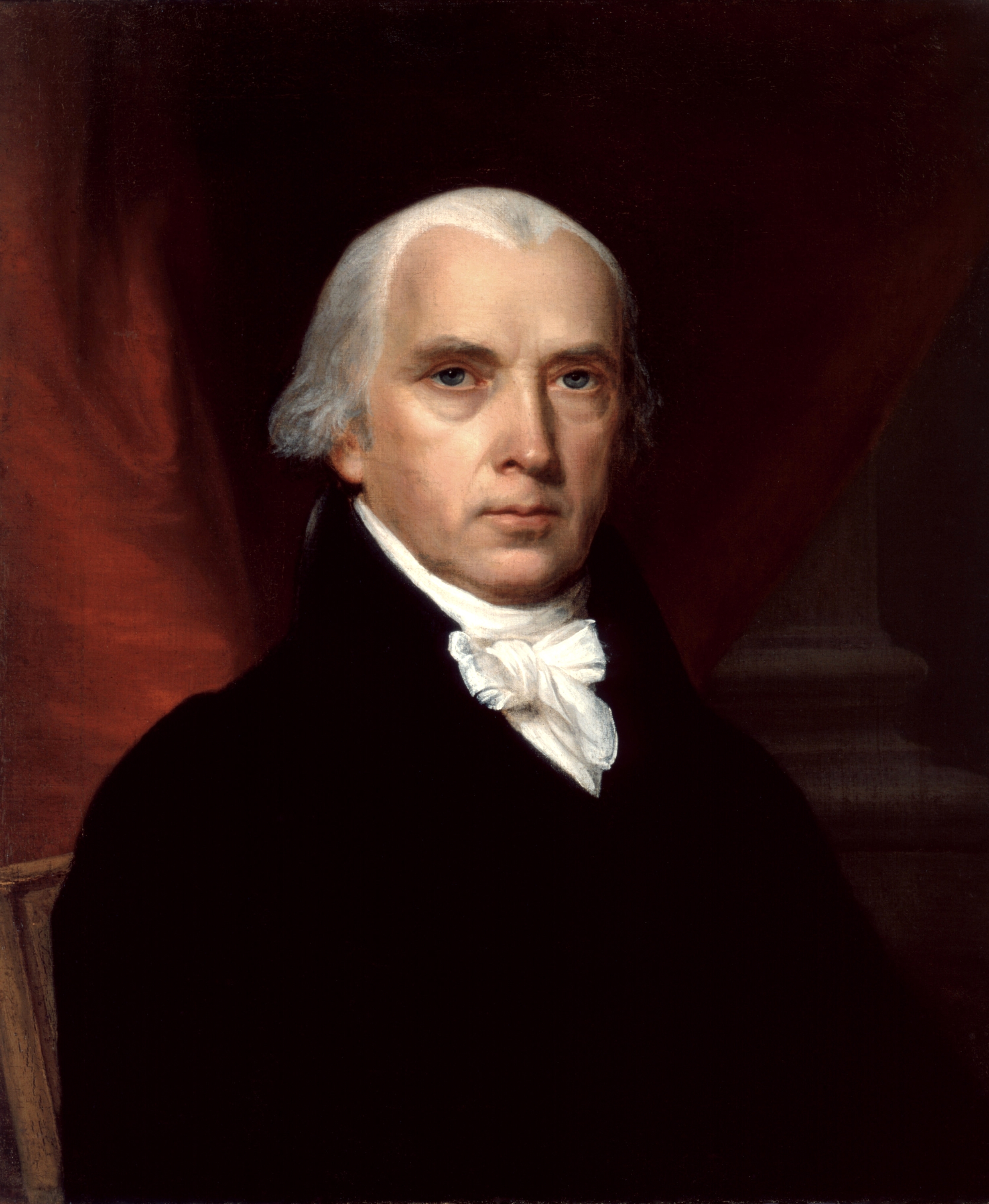
File:James Madison.jpg

JAMES MADISON: "...ANNUL THE ACTS OF THE USURPERS!"


THE CHOICE BETWEEN PURISM AND PRAGMATISM IN POLITICS HAS MORAL CONSEQUENCES


Third Party Conservatives: Fixers or Spoilers?

“What is to be the consequence, in case the Congress shall misconstrue … the Constitution and exercise powers not warranted by its true meaning, I answer the same as if they should misconstrue or enlarge any other power vested in them … a remedy must be obtained from the people, who can by the elections of more faithful representatives, annul the acts of the usurpers.” –James Madison

In the years following the resolute conservative leadership of Ronald Reagan, the Republican Party became indolent, more reactive than proactive. Making matters worse, the party supported the infiltration of so-called “big-tent moderates,” those whose policy positions are almost indistinguishable from their Democrat challengers. Consequently, conservative third-party candidates have become significant players in national and state elections.

Conservatives voters have mixed opinions on support for third-party candidates. Thanks to the Tea Party movement, the question ofconstitutional integrity has been reinvigorated, and there are more outstanding third-party candidates in this midterm election than ever before.

Many Patriot readers have asked: “How should one vote when a third-party candidate is more conservative than the Republican offering? Should one vote for the lesser of two evils on the major party tickets? Is a vote for a third-party conservative a wasted vote or, worse, one that takes votes from a moderate on the ticket, and seats a Leftist?”

The answers, of course, depend on one’s affinity for purism versus pragmatism, and the particular circumstances and consequences of each political contest.

Purists are those who rigorously and steadfastly adhere to established traditions and principles in the conduct of their affairs, in application both to individual and societal matters.

Pragmatists, on the other hand, are those who take a practical approach to arriving at solutions, even if that means supporting the lesser of two evils. They thus try to strike a balance between principles and practicality rather than take a strict ideological line.

So, how to vote? By way of an answer, let’s consider the following.

One of the issues challenging some incumbent Republican candidates is their vote for the 2008 Troubled Asset Relief Program (TARP), which many conservatives begrudgingly supported and which was signed into law with similar enthusiasm by George W. Bush at the end of his second term.

A conservative purist would argue that the government should have no role in the regulation of free enterprise, other than ensuring the exercise thereof, and that the economy, if left to its own devices, is self-regulating, and that self-regulation is the most efficient means to achieve economic prosperity. In the case of TARP, the purist objects to the intervention, and if the economy collapses as a result, the notion is that it will eventually recover and be stronger for what it was allowed to endure.

The conservative pragmatist, on the other hand, while concurring with the academic principles held by the purist, understands the consequences of the purist’s position, and weighs that outcome against the consequences of striking a compromise. Thus, the pragmatist holds his nose and votes for TARP, understanding that averting an unprecedented economic collapse is more important than upholding an academic principle.

I consider myself a purist in regard to the government’s TARP intervention, disagreeing with it in principle. However, while I did not live through the Great Depression, I have learned much about its causes and consequences from those who did, and thus I supported a pragmatic compromise in the matter of government intervention to prevent the cascading failure of our banking system, assuredly taking the economy down with it.

Now, whether you agree or disagree with this compromise, the bottom line is that government intervention created the crisis of confidence that led to the near collapse of our economy and, in my humble opinion, government intervention was the solution.

I will always be conflicted over my position on TARP. Fortunately, however, the original bailout cost to taxpayers, estimated to be $356 billion, has proven to be less than 10 percent of that loss and, in terms of our GDP, less than a third the loss due to the savings-and-loan crisis of the late 1980s. TARP should not be confused with Obama’s so-called “American Recovery and Reinvestment Act” which isgoing to cost taxpayers more than a trillion dollars. (Many thanks to the Red Chinese for underwriting this DemoDebt, while growing their own economy at a 10 percent clip.)

How does this help answer the questions about voting for third-party candidates?

The purist will vote for the most conservative candidate on the ballot, regardless of the consequences. The notion here is that if such votes end up seating a liberal (as votes for Ross Perot may have done for Bill Clinton in 1992), this ultimately will be for the good of liberty.

The pragmatist will vote for the candidate most likely to defeat the liberal, even if that candidate does not comport with all, or even most of, the purist’s principles. The pragmatist thus believes that the consequences of seating a liberal will be more injurious to freedom and liberty than seating a moderate.

The above debate is as contentious as the consequences of each approach, and it has been raging for as long as third-party candidates have been on ballots.

The consummate conservative protagonist, William F. Buckley, concluded that the best rule was to vote for the most conservative electable candidate.

A case in point would be last month’s Delaware senate primary.

Conservative commentator Charles Krauthammer, a pragmatist, wrote that the election of third-party conservative candidate Christine O’Donnell “was a bad day not only for Republicans but for conservatives.” He doubts that O’Donnell can defeat her liberal opponent in the upcoming general election, but believes her moderate Republican opponent Mike Castle would have.

“The very people who have most alerted the country to the perils of President Obama’s social democratic agenda may have just made it impossible for Republicans to retake the Senate and definitively stop that agenda,” argues Krauthammer.

“Of course Mike Castle is a liberal Republican,” he says. “What do you expect from Delaware? A DeMint? Castle voted against Obamacare and the stimulus. Yes, he voted for cap-and-trade. That’s batting .667. You’d rather have a Democrat who bats .000 and who might give the Democrats the 50th vote to control the Senate? Castle wasn’t only electable. He was unbeatable.”

Whether Krauthammer is right about O’Donnell’s electability is yet to be determined, but his conclusion should be weighed carefully by all of my likeminded conservative purists.

To be sure, we are in a unique political cycle this year. Other third-party candidates have already defeated numerous establishment Republican Senate candidates in the primaries. Joe Miller defeated Sen. Lisa Murkowski in Alaska. Marco Rubio so frightened Gov. Charlie Crist in Florida that Crist became an “independent” and now stands to be pounded by Rubio in the general election. And there are strong conservatives running with an “R” next to their name: Rand Paul in Kentucky, Mike Lee in Utah, Sharron Angle in Nevada and Ken Buck in Colorado.

Additionally, post primary, there are almost 20 House seats with strong Republican contenders in which third-party conservative challengers are pushing those Republicans to the right. Will those challengers split the conservative vote and give the seat to Democrats in the process?

There’s plenty of consternation within the ranks of the Republican establishment as to what to do with third-party conservatives. Here’s one idea for the GOP: Back strong conservative candidates on the big ticket so as to obviate the need for third-party candidates.

In Tennessee’s 3rd congressional district where I will vote, we face a dilemma similar to that in many House districts. I supported a longtime colleague and strong conservative primary contender, Robin Smith, an outspoken advocate for the Rule of Law, with a proven political record. Yet one of Robin’s six Republican opponents, wealthy lawyer Chuck Fleischmann, a political unknown, defeated her by 1,409 votes. He did so by infusing his campaign with more than $100,000 of his own money, running negative ads and landing a last-minute endorsement from populist Fox News infotainer Mike Huckabee. (Fleishmann’s campaign manager had run Huckabee’s abysmal presidential bid and called in a political favor.)

It was a stinging defeat for Robin and all conservatives in our district. But, hey, I’m not bitter.

In the upcoming midterms, I must decide whether to support Fleischmann, whose campaign tactics were abysmal but who promises he’s a conservative, or vote for one of his authentic conservative third-party opponents and risk giving the seat to Fleischmann’s ultra-Leftist Democrat opponent.

What criterion will I use?

Fleischmann has a strong lead over his opponent and none of the third-party contenders are polling beyond single digits. So I will likely cast my vote for Savas Kyriakidis in order to fire a round across Fleischmann’s bow, and give him notice that if he breaks his conservative promise, he will serve only one term. Of course, if things change over the next two weeks and I detect a risk of seating the Leftist, I’ll hold my nose on Election Day, knowing that this election marks but one battle to restore constitutional integrity, not the end of the war.

My advice to our readers: Vote, and make your vote count! If you are faced with a choice between a third-party conservative and a Republican moderate, and you can vote for the most conservative candidate without seating a Leftist as a consequence, do so. If not, hold your nose and vote for the most electable conservative on the ticket.

(Footnote: Regarding all the media polling in the final weeks of this midterm election, don’t be lulled into overconfidence. Resolve to vote on 2 November, and bring your like-minded friends and family with you to the polls. In the meantime, please revisit the essay “Pollaganda — Political Polling as Propaganda for a full understanding on how the media uses polls to influence elections.)

Semper Vigilo, Fortis, Paratus et Fidelis!

Mark Alexander
Publisher, The Patriot Post

http://patriotpost.us/alexander/2010/10/21/third-party-conservatives-fixers-or-spoilers/

THE USURPER CONTEMPLATES THE END


It Is Over


WASHINGTON -- The Democrats are about to be beaten by something that they do not in their heart of hearts think exists, a huge national majority. At this late hour, with the storm clouds gathering and the livestock getting restless, they see only sunshine. Yes, there is "foreign money" out there. Yes, the media has bungled broadcasting the purity of the Democratic message. And naturally angry voices can be heard. Yet surely there is no majority gathering to unseat the party of decency and good deeds. Well, there is, and it is nothing like the Democrats describe it.

That majority is amiable, sensible, and believes in limited government. It is convinced that we face a catastrophic budget crisis, and that measures must be taken against the spending and on behalf of growth. Furthermore, many of these friendly Americans would be delighted to give our President a ride home if they found him on a street corner, though they would be a lot happier if he did not live at 1600 Pennsylvania Avenue. They doubt he would ask them in for a drink. After all, to him they do not exist.

Many of these people are Tea Partiers. Now they certainly do exist. Yet they are nothing like the Democrats believe them to be. They are not angry and warlike. They are concerned about what the Democrats have done these past months, but they will retire them the old fashioned way, through the ballot box.

Our President has a difficult time conceiving of this growing majority who oppose him. Apparently in May, President Obama asked a group of presidential historians over to the White House to discuss history and to inform him of any historic movements comparable to the Tea Party Movement in all of American history. The historians told him what he wanted to hear. As Peter Baker wrote in the New York Times Magazine, the President wanted to know whether there were "precedents for this sort of backlash against the establishment? What sparked them and how did they shape American politics." Reportedly the historians spoke of the "Know-Nothings" of the 1850s, the Populists of the 1890s, and the Coughlinites of the 1930s. Thus our President was reassured. They were racists and fruitcakes. He heard nothing to challenge his smug sense of history.

Yet, once again he was misinformed by his experts. Michael Barone speaks more accurately of the historic precursors to the Tea Party Movement. He says voters concerned about limited government and federal spending were forming a prodigious movement toward the end of the 1930s. The movement in his mind might have successfully challenged President Franklin D. Roosevelt by 1940, but the rising threat of Nazism intervened. Doubtless there have been other precursors to the Tea Party Movement, for instance the original Tea Partiers back in colonial Boston. The truth is there has been a tug between big centralized government and local government since the founding of the Republic.

Reading the piece by Baker was an odd experience. It was talking about a president who in less than two years has lost the trust of the American people, especially Independents. It quoted soaring rhetoric from Obama in June of 2008 when he said, "we will be able to look back and tell our children that this was the moment when we began to provide care for the sick and good jobs to the jobless; this was the moment when the rise of the oceans began to slow and our planet [the whole planet!] began to heal; this was the moment when we ended a war and secured our nation and restored our image as the last, best hope on earth." After that there will be nothing to do, so we can all play golf or read a good book.

There was also this: "Obama's team takes pride that he has fulfilled three of the five major promises he laid out as pillars of his 'new foundation'... -- health care, education reform, and financial reregulation." So what? Education reform is a nullity. Ten years from now, test scores will still be in the drink. As for the other monstrosities, they are a large part of the Obama disaster. The growing majority that is about to retire Obama's Democratic majority in the House and possibly in the Senate knows this. The Ruling Class, including Baker, seems to be oblivious of it, but the rest of the nation knows it.

Socialism is another of the gods that have failed. If you balk at my use of the word socialism, how about if I say Liberalism is another of the gods that have failed? What is astonishing is precisely how extreme the Liberalism practiced by Obama and the Democrats has been. Well, it has failed. The Liberals show no hint that they realize this, but the American majority does. Now that majority has to deal with the mess we are in. As for the Liberals, they have to explain why they are summarily leaving office.