Wednesday, January 4, 2012

IT'S A MIGHTY NICE DEAL IF YOU AN GET IT

!!!!


Pull the parachute

by Jeff Jacoby
The Boston Globe
January 4, 2012


Send RSS Share: Facebook Twitter Google +1
Be the first of your friends to like this.
A YEAR AGO THIS WEEK, just two days before being shot by a deranged assailant in her district, Arizona Representative Gabrielle Giffords introduced legislation to cut congressional salaries by 5 percent, from $174,000 to $165,300.
Needless to say, the bill didn't become law -- the last time the House and Senate actually trimmed their members' pay was during the Great Depression. Yet there are few things Congress could do that would be more certain to win public esteem. In a national poll commissioned last month by The Hill, a Washington newspaper, 67 percent of voters said lawmakers should be paid less. With Congress's approval rating barely above single digits, and with so many Americans feeling the sting of a weak economy, you might think support for a modest one-time pay cut would be a no brainer -- especially since congressional pay has been hiked 10 times since 1998.
Yet legislation to curb Congress's outlandish pay and perks rarely gets far on Capitol Hill. The relatively few members willing to make noise about the issue are not rewarded with the love of their colleagues. Former Senator Russ Feingold of Wisconsin once told me he got "the coldest stares" whenever he introduced legislation to block congressional pay hikes from kicking in automatically. Sometimes his colleagues would try to change his mind, Feingold said. "They tell me about their kids' tuition. Or they say, 'Don't you think you're worth more money?'" He would respond that if they thought they deserved an increase, they should be willing to openly vote for one.
Feingold left Congress last year, but other lawmakers have taken up the cause. Representative Mike Coffman of Colorado -- who is as conservative a Republican as Feingold was a liberal Democrat -- last month introduced a bill that would ban "stealth" pay hikes by preventing any congressional pay raise from taking effect unless members of Congress first cast a recorded vote. Another Coffman bill would cut congressional salaries by 10 percent.
Coffman's top priority for reforming Congress, however, is H.R.2913, which would end the gold-plated congressional pension plan enjoyed by members of Congress. Of all the ways in which members of Congress reward themselves, none is as lucrative as their defined-benefit pensions, a perk more lavish than anything most private-sector workers will ever see.
Under the current system, senators and representatives can collect an annual pension worth 1.7 percent of their present salary for every year they serve in Congress up to 20 years, plus an additional 1 percent for each year beyond that. With congressional pay now at $174,000, a member of Congress who retires after just six years can thus look forward to receiving more than $17,700 a year for life beginning at age 62. (That doesn't include the generous cost-of-living adjustments -- another benefit unavailable to most private-sector retirees.) A 20-year congressional veteran would collect more than $59,000 a year -- and the payments begin at age 50. For members elected before 1984, there is an even more generous setup.
And how much of their salary do incumbent senators and representatives contribute to this sumptuous pension plan? A puny 1.3 percent. (They also participate in Social Security, and are eligible for a 401(k)-style plan, neither of which would be affected by Coffman's bill.)
US Rep. Mike Coffman: "To say that Congress is somehow immune to sacrifice is just wrong."
It's a mighty nice deal if you can get it -- between twice and three times as munificent as pensions offered to similarly-salaried workers in the corporate world, according to the National Taxpayers Union. For the most part, mere mortals like us -- who are, of course, paying for Congress's lifestyle with our taxes -- can only gape from the sidelines.
A veteran of both the Army and the Marine Corps, Coffman says his military training instilled in him a fundamental leadership principle: Never order someone else to do something you would not be prepared to do yourself. "For us to navigate out of this economic crisis that we're in," he told me yesterday, "we're going to have to make tough decisions that will affect other people's pay and benefits. To say that Congress is somehow immune to sacrifice is just wrong."
So far Coffman has rounded up 15 cosponsors for his pension bill, with new ones joining at about one per week. He expected to have more backing from colleagues who ran as fiscal conservatives, but he is confident that public pressure will bring them around.
Congress must set an example, he says, and ending its rich pensions is the way to set it. "Either incumbents sign on, or they're going to be giving their opponents some serious leverage."
(Jeff Jacoby is a columnist for The Boston Globe. His website is www.JeffJacoby.com).
-- ## --

THOUGHTS ON THE POLITICAL SITUATION

!!!!

FROM THE PATRIOT POST

http://patriotpost.us/edition/2012/01/04/chronicle/


"Public debt has increased by 67 percent over the past three years, and too many Americans refuse even to see it as a problem. For most of us, '$16.4 trillion' has no real meaning, any more than '$17.9 trillion' or '$28.3 trillion' or '$147.8 bazillion.' It doesn't even have much meaning for the guys spending the dough: Look into the eyes of Barack Obama or Harry Reid or Barney Frank, and you realize that, even as they're borrowing all this money, they have no serious intention of paying any of it back. That's to say, there is no politically plausible scenario under which the 16.4 trillion is reduced to 13.7 trillion, and then 7.9 trillion and, eventually, 173 dollars and 48 cents. At the deepest levels within our governing structures, we are committed to living beyond our means on a scale no civilization has ever done." --columnist Mark Steyn
"[I]f you tax people who work, and you pay people who don't work, don't be surprised if you find a lot of people not working. I have never heard of a poor person spending himself or herself to prosperity. It doesn't work." --economist Arthur Laffer

Essential Liberty

"Judges are not divine and their opinions are not holy writ. As every American schoolchild learns, the judiciary is intended to be a co-equal branch of government, not a paramount one. If the Supreme Court wrongly decides a constitutional case, nothing obliges Congress or the president -- or the states or the people, for that matter -- to simply bow and accept it. Naturally this isn't something the courts have been eager to concede. Judges are no more immune to the lure of power than anybody else, and their assertion of judicial supremacy ... has won them an extraordinary degree of clout and authority. That aggrandizement, in turn, they have attempted to cast as historically unassailable. ... But the heart and soul of American democracy is that power derives from the consent of the governed, and that no branch of government -- executive, legislative, or judicial -- rules by unchallenged fiat." --columnist Jeff Jacoby

Insight

"Courage is the greatest of all the virtues. Because if you haven't courage, you may not have an opportunity to use any of the others." --English author Samuel Johnson (1709-1784)
"Nothing is easier than spending public money. It does not appear to belong to anybody. The temptation is overwhelming to bestow it on somebody." --President Calvin Coolidge (1873-1933)

The Demo-gogues

The BIG Lie, Part I: "I'm a hundred percent confident that the people of Iowa and the American people will win the day on November 6th of this year when President Obama is re-elected because of his policies, because of the fact that he has brought this country out of the worst economic disaster that we faced since the Great Depression and the people of America know." --DNC Chairwoman Rep. Debbie Wasserman Schultz (D-FL)
The BIG Lie, Part II: "If there is anyone who has set an example about making sure that we reduce the influence of lobbyists and of corporate and outside special interests on campaigns it is President Obama." --Debbie Wasserman Schultz
All the world is a stage: "People who know me know that I am a softie. I mean, stuff can choke me up very easily. The challenge for me is that in this job, I think, a lot of times the press or how you come off on TV, people want you to be very demonstrative in your emotions. And if you're not sort of showing it in a very theatrical way, then somehow it doesn't translate over the screen." --Barack Obama
Mockery: "Remember Yogi Berra. I don't like the food at that table and the servings are too small. [Republicans] don't like the tax cut and now they are claiming that it is too small." --House Minority Leader Nancy Pelosi

Monday, January 2, 2012

PRESIDENT NEWT GINGRICH COULD HELP RESTORE THE BALANCE TO OUR JUDICIAL SYSTEM

!!!!

THERE IS HOPE FOR OUR COURTS IF GINGRICH IS ELECTED

!!!!

The Supreme Court’s judgment isn’t absolute

by Jeff Jacoby
The Boston Globe
January 1, 2012


http://www.jeffjacoby.com/10961/the-supreme-court-judgment-isnt-absolute
 Send  RSS Share: Facebook Twitter Google +1
  Be the first of your friends to like this.

NEWT GINGRICH’S PRESIDENTIAL AMBITIONS may be heading for the exits — opinion polls suggest that the former House speaker’s hour has come and gone — but his critique of judicial supremacy deserves to taken seriously no matter what happens in Iowa or New Hampshire.
Contrary to popular belief, their judgments were never meant to be revered “almost as if God has spoken.”


In a 54-page position paper, Gingrich challenges the widely held belief that the Supreme Court is the final authority on the meaning of the Constitution. Though nothing in the Constitution says so, there is now an entrenched presumption that once the court has decided a constitutional question, no power on earth short of a constitutional amendment — or a later reversal by the court itself — can alter that decision.

Thus, when House Minority Leader Nancy Pelosi was asked for her reaction to the Supreme Court’s notorious eminent-domain ruling in Kelo v. New London, she replied as though a new tablet had been handed down from Sinai: “It is a decision of the Supreme Court. If Congress wants to change it, it will require legislation of a level of a constitutional amendment. So this is almost as if God has spoken.”

But judges are not divine and their opinions are not holy writ. As every American schoolchild learns, the judiciary is intended to be a co-equal branch of government, not a paramount one. If the Supreme Court wrongly decides a constitutional case, nothing obliges Congress or the president — or the states or the people, for that matter — to simply bow and accept it.

Naturally this isn’t something the courts have been eager to concede. Judges are no more immune to the lure of power than anybody else, and their assertion of judicial supremacy — plus what Gingrich calls “the passive acquiescence of the executive and legislative branches” — has won them an extraordinary degree of clout and authority. That aggrandizement, in turn, they have attempted to cast as historically unassailable. In Cooper v. Aaron, the 1958 Little Rock desegregation case, all nine justices famously declared “that the federal judiciary is supreme in the exposition of the law of the Constitution” — a principle, they asserted, that has “been respected by this court and the country as a permanent and indispensable feature of our constitutional system.”

That wasn’t really true. In the words of Larry Kramer, dean of Stanford’s Law School (and a former clerk for Justice William Brennan, one of the court’s liberal lions), “The justices in Cooper were not reporting a fact so much as trying to manufacture one.” It worked. In recent decades, the claim of judicial supremacy has clearly prevailed. Look at the way it’s taken for granted, for example, that whatever the Supreme Court decides next spring about the constitutionality of the ObamaCare insurance mandate will settle the issue once and for all.

“To consider the judges as the ultimate arbiters of all constitutional questions,” wrote Thomas Jefferson in 1820, is “a very dangerous doctrine indeed.”


Gingrich argues that this is unhealthy, and that the elected branches have an obligation to check and balance the judiciary. “The courts have become grotesquely dictatorial, far too powerful and, I think, frankly arrogant,” he said in Iowa last month. From the unhinged reaction his words provoked — “this attempt to turn the courts into his personal lightning rod of crazy is simply Gingrich proving yet again that he needs to be boss of everything,” railed Dahlia Lithwick in Slate – you’d think he had declared war on the heart and soul of American democracy.

But the heart and soul of American democracy is that power derives from the consent of the governed, and that no branch of government — executive, legislative, or judicial — rules by unchallenged fiat. Gingrich is far from the first to say so.

“To consider the judges as the ultimate arbiters of all constitutional questions,” wrote Thomas Jefferson in 1820, is “a very dangerous doctrine indeed, and one which would place us under the despotism of an oligarchy.” Abraham Lincoln — revolted by the Supreme Court’s ruling in Dred Scott that blacks “had no rights a white man was bound to respect” — rejected the claim that the justices’ word was final. “If the policy of the government upon vital questions affecting the whole people is to be irrevocably fixed by decisions of the Supreme Court the instant they are made,” he warned in his first inaugural address, “the people will have ceased to be their own rulers.”

Not all of Gingrich’s proposals for reining in the courts, such as summoning judges before congressional committees to explain their rulings, may be wise or useful. But his larger point is legitimate and important. Judicial supremacy is eroding America’s democratic values. For the sake of our system of self-government, the balance of federal power needs to be restored.


(Jeff Jacoby is a columnist for The Boston Globe. His website is www.JeffJacoby.com).

Friday, December 30, 2011

PUBLIUS SPOKE OUT ON THE SUBJECT OF JUS SOLIS CITIZENSHIP

!!!!


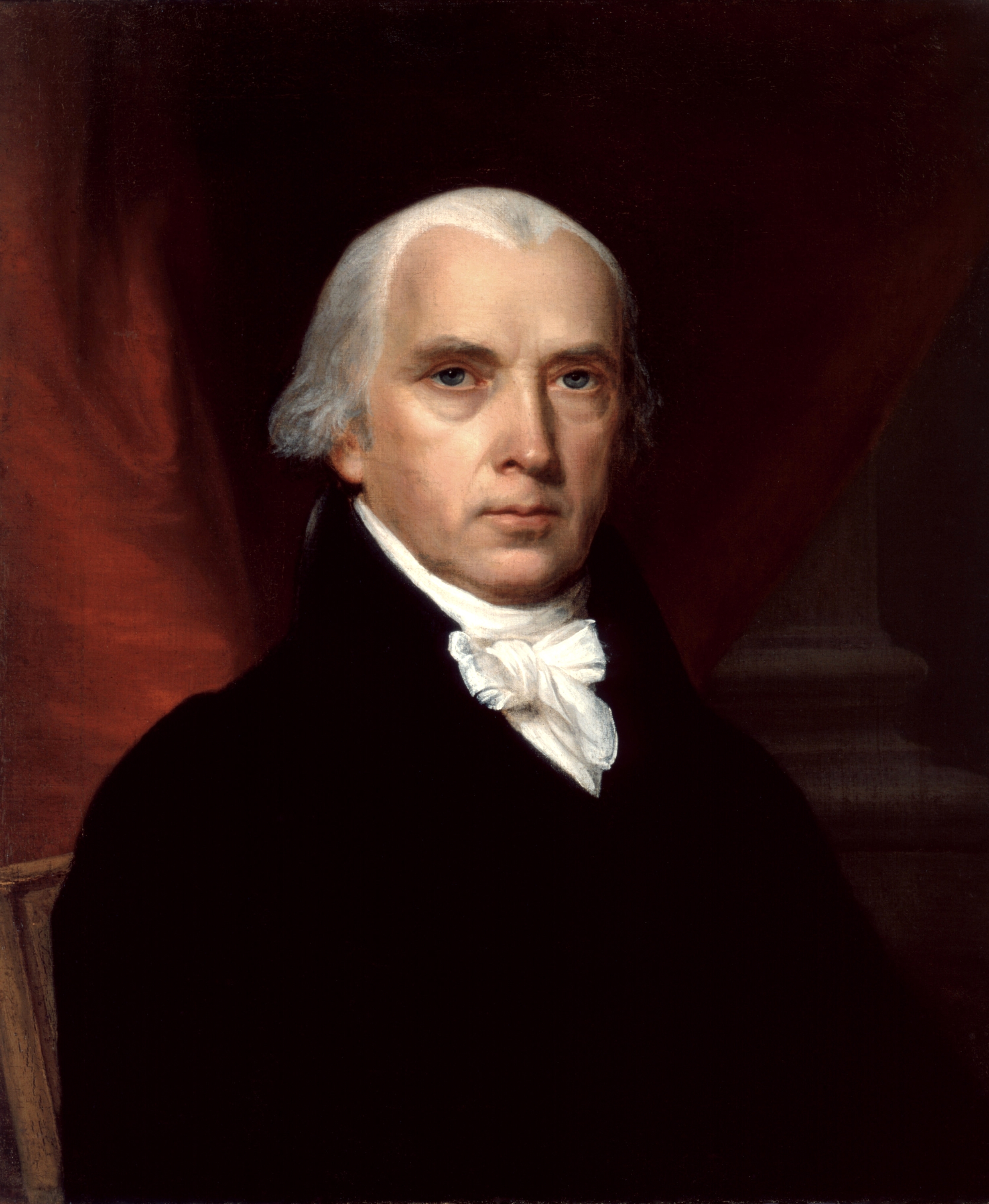
 James Madison, Fourth President of the United States,  1809-1817


Barack Hussein Obama is not a natural born citizen of the United States and thus is ineligible to be President of the United States.

It is important to distinguish between being born a citizen of the United States and being born a natural born citizen of the United States.  Only those persons who are born on the soil of the United States of two parents, BOTH OF WHOM WERE CITIZENS OF THE U.S. AT THE TIME OF THE BIRTH, are citizens of the United States within the meaning of Article Two, Section One of the United States Constitution that specifies the necessary qualification for becoming President.  

By act of Congress late in 19th Century any person born on the soil of the United States is a citizen of the United States regardless of the nationality of the child's parents, but that child is not a natural born citizen if both parents were not themselves citizens at the time of the birth.

Some have argued that according to British Common Law those persons born on the soil of the United States of parents who themselves were not citizens of the United States were citizens even though Congress in the 1802 Naturalization Act specifically denied the applicability of British Common law in the matter of citizenship in the United States.

Leo Donofrio, posted the article below on his blog Natural Born Citizen showing that Publius (who was probably President James Madison) strongly stated British Common Law did not apply in a case involving James McClure.

- Leo Rugiens

.............................................................


THE PUBLIUS ENIGMA: Newly Revealed Evidence Establishes That President James Madison’s Administration Required Citizen Parentage To Qualify Native-Born Persons For U.S. Citizenship.

by Leo Donofrio

naturalborncitizen.wordpress.com

I was recently forwarded an incredibly amazing article from the October 10, 1811 edition of The Alexandria Herald newspaper.  RXSID of Free Republic sent it with a brief note, stating, “Check out this case.”  The Herald article is entitled, Case of James McClure.  The author is…PUBLIUS.
Publius was the pseudonym used by Alexander Hamilton, James Madison, and John Jay, for their anonymous authorship of The Federalist Papers.  By 1811, Hamilton was dead and Jay retired.  My research leads me to believe that the article was written by James Madison, but this has not been conclusively established yet.  Regardless of authorship, Madison was President at the time the article was written, and it discusses the official position of his administration denying U.S. citizenship based upon simple birth in the country.
The official position of the Madison administration was that persons born in the U.S. to alien parents were not U.S. citizens.  This was the ruling concerning James McClure, despite the fact that his parents had been settled in the country for many years prior to his birth.  The article makes clear that the United States Minister to France, General Armstrong, refused diplomatic protection for McClure by denying he was a citizen of the United States.
This was the official decision despite McClure having been born in South Carolina in 1785 to a father who was naturalized months later in 1786.  Armstrong informed the French authorities that the man was not a U.S. citizen, and McClure was left in French custody.  The article by PUBLIUS indicates that Armstrong might have mis-applied the 1802 Naturalization Act, but PUBLIUS also makes clear that McClure was not a citizen by virtue of his native birth in South Carolina:

There was no statute in South Carolina in 1785 which granted citizenship to persons born there similar to Virginia’s statute mentioned in the article by PUBLIUS.  Simply being a “son of the soil” was not enough, and this evidence repudiates the contention that the British common law had been adapted in all of the states after the revolution.  Since there was no statute in place making those born in South Carolina citizens, McClure was not held to be a native-born citizen.  That argument was utterly rejected throughout the affair.
The article goes on to question whether the 1802 act is defective in that PUBLIUS seems to believe citizenship ought to be revoked for naturalized persons who return to their original country and establish domicile there again.  But the article makes clear that Madison’s administration steadfastly denied that simple birth in the United States was enough to establish citizenship.  This, of course, discredits the conclusions of Justice Horace Gray in U.S. v. Wong Kim Ark, as well as the infamous New York Chancery opinion of Lynch v. Clark.  Both cases contain erroneous assumptions that the British common law rule of jus soli governed citizenship from the very genesis of the United States.
I tracked down the original article published in the Richmond Enquirer on October 1, 1811, which was then republished in The Alexandria Herald on October 10, 1811.  Both of these newspapers were published in Virginia, Madison’s home state.  Furthermore, the PUBLIUS penned article was the grand finale of nearly a year-long argument which went viral in various newspapers of the day starting in January 1811.
I have been up and down the East Coast tracking down the remaining newspaper articles on this as well as other supporting historical information.  I have also consulted with professionals and am preparing an extensive section for my forthcoming book which details everything that has been unearthed.
The whole story cannot be understood by way of online searches.  The internet is barren on this case.  Some of the necessary information isn’t even available in the Library of Congress or National Archives.
Here are the images from the Alexandria Herald and Richmond Enquirer.  The Herald scan is much easier to read than the Enquirer scan.
Leo Donofrio, Esq.
[See commenting rules here.]

2 Responses to “THE PUBLIUS ENIGMA: Newly Revealed Evidence Establishes That President James Madison’s Administration Required Citizen Parentage To Qualify Native-Born Persons For U.S. Citizenship.”

  1. naturalborncitizen Says:
    When Publius states, “The case of James McClure is clearly a nice one -”, the word “nice” is used to indicate “requiring accuracy”.
    nice   [nahys] Show IPA
    adjective, nic·er, nic·est.
    1.
    pleasing; agreeable; delightful: a nice visit.
    2.
    amiably pleasant; kind: They are always nice to strangers.
    3.
    characterized by, showing, or requiring great accuracy, precision, skill, tact, care, or delicacy: nice workmanship; a nice shot; a nice handling of a crisis.

    4.
    showing or indicating very small differences; minutely accurate, as instruments: a job that requires nice measurements.
    5.
    minute, fine, or subtle: a nice distinction.
    http://dictionary.reference.com/browse/nice
  2. naturalborncitizen Says:
    Everything you’ve been force fed about the early citizenship standards in the fledgling United States which insists that the British Common law jus soli rule had been adopted by our new federal government is wrong. Justice Horace Gray should have recused himself in Wong Kim Ark because he was directly determining whether or not the President who had appointed him was eligible. Therefore, Gray was determining his own fate and how history would view his appointment. His opinion in Wong Kim Ark is built on a foundation of lies and half truths. This case of James McClure was not even mentioned by Gray, yet it destroys his false assumptions.
    There was no general rule in this country for Jus Soli citizenship. Gray was full of crap, but he was really smart at dishing out crap. He was a genius at obfuscating the truth of the law, but history will now correct the lie.
    Don’t forget, it was the US Government which denied Wong Kim Ark to be a citizen. But I guess the Executive Branch was occupied by a bunch of birthers in 1898. The Attorney General just didn’t like Obama, who he must have seen in a prophetic vision. Damn birthers.
    Damn facts. James McClure was not a US citizen by birth on the soil. The Madison administration required his father to be naturalized before he was born for him to have been considered a citizen at birth. James McClure was NOT eligible to be POTUS. The article makes clear that months after McClure was born, he might have been entitled to citizenship via derivative naturalization, but he certainly was not a citizen at the time of his birth, and therefore was not natural born. His birth in the US did not make him a US citizen at all, let alone natural-born. The case of James McClure speaks volumes to the original meaning of Article 2 Section 1.
    More to come on James McClure et al.
    Leo

Thursday, December 29, 2011

HAIL, CAESAR!

!!!!


Illustration by Alexander Hunter for The Washington Times


IN OBAMA HE TRUSTS

by Dr. Milton R. Wolf

THE WASHINGTON TIMES, Wednesday 28, 2011

http://www.washingtontimes.com/news/2011/dec/28/in-obama-he-trusts/

There’s something profoundly tragic about the failed presidency of Barack Obama.

He was supposed to be a new kind of president, a man who embodied hope and would transcend petty politics and even race. Instead, we’re left with a downgraded America that is stagnating under the weight of its bloated government. As tragic as that alone is, even this is but a mere symptom of Mr. Obama’s larger fundamental failure: He simply does not trust the Americans who entrusted him with the presidency.

 Most presidents, we believe, ascend to the Oval Office, but for the 44th president, the reverse seems true. Whatever majesty the White House can muster must rise to the grandiosity of Barack Obama. “We are the ones we have been waiting for,” said the man who writes autobiographies and later would claim to control the rise of the oceans.

 As recently as this month, the food-stamp president of 13 million unemployed Americans declared himself the fourth-most-accomplished president in the history of the United States, eclipsing, in his own mind, President Reagan and even our nation’s father, George Washington. That in only three years. Barack the Magnificent won’t allow trivialities like $15 trillion debts or historic national credit downgrades dissuade him.

Mr. Obama may care deeply for America, but he believes in only one thing: Barack Obama. And you are not Barack Obama.

Where once the American flag was hailed universally as the ultimate symbol of freedom, we who live under it have slowly but surely surrendered our liberties to an insatiable government. Consider our decline in just the past two generations. Our grandfathers, who stood against evil and shed their blood to stop it, never would have tolerated their own government becoming so totalitarian that it would dictate to them what car they should drive, what (if any) health insurance they should choose or even what light bulb they should buy.

Has our generation been worthy of earlier Americans’ sacrifices? Or have we surrendered their hard-fought victories in return for false promises of a big-government utopia that never materializes? Look no further than the politicians we elect. We have chosen as our president a man who believes we are unworthy, not of the previous generations’ sacrifices, but rather unworthy of freedom itself.
The sum total of Mr. Obama’s political philosophy, the unifying theme of his presidency, amounts to this: You cannot be trusted to live as a free American.

President Obama’s first major legislative action, the failed $787 stimulus, revealed his fundamental distrust of free Americans. A president who actually trusts his people would stand aside as they freely chose how to invest their capital and their labor. Mr. Obama, on the other hand, simply doesn’t believe you are smart enough to know what’s best for you. He commandeered nearly $1 trillion dollars from the taxpayers and redirected it as he saw fit. That he squandered billions on crony boondoggles such as the Solyndra solar-panel company or laughable efforts to measure the malt-liquor habits of Buffalonians and the like is evidence merely of his incompetence. That he trusted only himself to allocate taxpayers’ money in the first place - even if he had had the capacity to do so brilliantly - is evidence of a much larger offense: This president distrusts his subjects.

Obamacare is a modern-day monument to government arrogance. So untrustworthy are Americans that they cannot be allowed to decide for themselves whether to purchase health insurance or, if so, how much. Likewise, physicians are too untrustworthy to provide you with care without first consulting the government’s “best practices” guidelines. Obamacare would solve both.

Untrustworthy bankers would become angelic under the restrictions of Dodd-Frank. Untrustworthy bloggers would fall in line under the Stop Online Piracy Act. Untrustworthy manufacturers would create the only jobs worth having under the dictates of the National Labor Relations Board. And untrustworthy energy consumers would act responsibly only under the restrictions of “cap and trade” or at least a dictatorial Environmental Protection Agency.

For statists like Mr. Obama, no matter how bloated our government has become, America is forever just one legislative act away from utopia, if only those untrustworthy Americans would just get in line. The man who ran on hope has instead embraced a tragic pessimism that views all free Americans with disdain as either incompetent rubes in need of his salvation or unrighteous villains in need of his rules. Either way, Mr. Obama embraces a command-and-control government and rejects American freedom.

Mr. Obama’s distrust of Americans is his fatal flaw, and Republicans would be wise to exploit it fully. The GOP should resist the temptation simply to become a cleverer version of autocrats who pull the same powerful levers of government but in different directions. Instead, they should become the party that embraces liberty.

If the 2012 election is between Republicans and Democrats or even between conservatives and liberals, Republicans might win. But if the election is instead between a bloated, ineffectual government that distrusts its subjects and Americans who still yearn to breathe free, Republicans will win. Only then will voters have a dramatic choice between a party that trusts Americans to be free and a party that does not.


Dr. Milton R. Wolf, a Washington Times columnist, is a radiologist and President Obama’s cousin. He blogs at miltonwolf.com.


Wednesday, December 28, 2011

RECOGNIZE ANYONE YOU KNOW? PERHAPS SOMEONE IN YOUR OWN FAMILY!

!!!!


MEET OUR WEALTHY OLIGARCHS

!!!!


Michael Ramirez Cartoon


The House of Representatives of the United States Congress was designed by our Founding Fathers to be the mirror image of the people of the Nation, while the Senate was designed to be the voice of the states and for most of the Nation's history the senators were selected by state legislatures.  It is indicative of how far our federal government has lost touch with the voters of the Nation that the members of the House are now wealthy oligarchs as this item from the Political Diary of the Wall Street Journal Online shows:

At least one group of Americans has been profiting despite the faltering economy: members of the U.S. House of Representatives. They're supposed to be the part of the government that's "closest to the people." But as the saying has it, they came to do good and stayed to do well. In their cases, mostly very well.
"Between 1984 and 2009, the median net worth of a member of the House more than doubled, according to the analysis of financial disclosures, from $280,000 to $725,000 in inflation-adjusted 2009 dollars, excluding home equity," the Washington Post reported Monday. By contrast, the typical American saw his "comparable median figure sliding from $20,600 to $20,500." The data came from the Panel Study of Income Dynamics at the University of Michigan.
That means the average representative's net worth is 35 times that of the average American's. This helps explain why Congress is so out of touch with the ordinary Americans they claim to represent and who in too many cases are suffering unemployment, foreclosures, even evictions. And it looks like the Occupy Wall Street movement needs to march about 228 miles south, from Manhattan to Capitol Hill. 
-- From an editorial in the Orange County (Calif.) Register on Dec. 27.

Tuesday, December 27, 2011

BARACK HUSSEIN OBAMA IS NO SPIRO AGNEW

!!!!


http://www.lizardpersonornot.com/wp-content/uploads/2010/08/spiro_agnew_lizard.jpeg


The Agnew Funeral.

Posted in Uncategorized on December 24, 2011 by naturalborncitizen

http://naturalborncitizen.wordpress.com/
 
Today we can finally bury, and lay to rest, the slander that Spiro Agnew, Vice President under Richard Nixon, did not meet the two citizen parent standard defined in Minor v. Happersett.


I was at the National Archives in Washington, D.C. yesterday and today double checking the information I found at Princeton’s amazing Firestone library earlier this week.  Before that, I was in Baltimore where I received a couple of important clues.


A few weeks ago, I was researching this issue at the Maryland Historical Society in Baltimore, only blocks from where Spiro Agnew grew up.  I asked the head reference librarian to help me track down the 1910 census.  I was hoping it would provide more information than the 1920 and 1930 census info, which contain a serious discrepancy.   The 1920 census indicates Spiro’s father was not naturalized by 1920, two years after Spiro was born, which, if true, would mean Agnew was born to an alien.  This has been alleged as precedent for Obama, who was born of an alien father.


The 1930 census indicates that Spiro’s father Theodore had been naturalized by then.  It was also common knowledge that the 1920 census info contradicts a World War I draft registration card on file for Theodore Agnew dating back to September 12, 1918, which indicates he was naturalized just prior to Spiro’s birth on November 9, 1918.


In Baltimore, the librarian told me that Agnew’s father lived in Schenectady, N.Y. in 1910 and that I should check the census for that city.  He also warned me that the name might be spelled wrong so I should try various spellings.  This turned out to be quite prophetic.


At Princeton, I found catalogue records for many biographies on Spiro Agnew, but most of them were not available on the shelves.  I had to order them from a special annex and it took 24 hours for them to arrive.  Meanwhile, I began Googling these biographies and was able to unearth a very relevant fact from the snippet view at Google for, “What Makes Spiro Run: The Life And Times Of Spiro Agnew“, by Joseph Albright (published by Dodd, Mead & Company New York, 1972).  The snippet told me something I did not know, that Spiro’s father first shortened his full Greek name to Theodore Anagnost, not Agnew.


I then plugged the name “Theodore Anagnost” into the database at Ancestry.com and searched the Schenectady N.Y. area.  Direct hit.  And the Md. Historical Society librarian was spot on, the name was listed on the 1910 census, and Ancestry.com had it catalogued as both Theodore Anagnost as well as Amagnost.  It clearly shows that Theodore entered the U.S. in 1902 and that he was naturalized by the time this census was taken in 1910.  It also contains the correct year of birth, 1878, and it includes the other members of his family.


Here is a hi res scan of the 1910 census record.  (See lines 5-8.)  The birth year is identical to the year listed on the draft card as well.


The next day I returned to Princeton and the biographies were waiting for me.  Two of them confirmed all of the above and more.  The Albright book states that Spiro Agnew’s father was born on September 12, 1878, named Theofraste Spiro Anagnostopoulos.  He entered the United States on September 19, 1902 through the port of Hoboken, N.J.  But before we discuss more from that book, separate relevant details stated in, “Spiro Agnew’s America” by Theo Lippman, Jr. (W. W. Norton & Co. Inc., New York, 1972), must come first.


Lippman’s book states that Theodore Anagnost declared his intention to naturalize in 1906, and that he submitted his petition for naturalization in 1907.  The declaration and the petition are two different documents.


Back to the Albright book now, and he indicates that Theodore had become a United States citizen in 1909 and then changed his name again in 1911 to Theodore Agnew.  Albright’s book gives a lot of detail on the genealogy of Spiro’s parents.


Here is a PDF of the relevant pages from both books.


Albright’s book also includes important details which corroborate the accuracy of the 1910 census regarding other household members who were included in that census and who were also included in the book.  Albright mentions Theodore’s brother George, his girl cousin Angeliki, and a male cousin who had anglicized his Greek last name to Lambert.  All of these people are listed in the 1910 census right under Theodore Anagnost, and all of these people are mentioned on the same page in Albright’s book as having lived together in Schenectady.


I also tracked down a high res image of the World War I draft card which is right next to brother George’s on the microfilm at the National Archives.  They both registered for the draft on the same day, Theo’s birthday, September 12, 1918.  Furthermore, both of them were listed as having been naturalized.


I also took a hi-res scan at Nara of the 1920 census.  If you look a few spots down from Theodore Agnew’s family entry, you will see the entry for George Agnew’s family.  It’s obvious now that many mistakes were made.  Both men are listed as having entered the U.S. in 1887.  That is absolutely wrong.  Furthermore, it lists both men as aliens, and it lists their wives as aliens.  This is also not accurate according to the 1910 census, the 1918 draft cards, and two thoroughly researched biographies from Spiro Agnew’s heyday.


Spiro Agnew was born in the U.S. of two parents who were citizens.  Therefore, he was a “natural born Citizen”.


Leo Donofrio, Esq.

Tuesday, December 20, 2011

MEET MITT ROMNEY, THE LGBT CANDIDATE

!!!!


Dec. 20, 2011
MassResistance Update
Pro-family activism
"In a time of universal deceit telling the truth is a revolutionary act."
- George Orwell

Campaigning in Iowa, Mitt Romney publicly re-states his pro-homosexual positions on military, judges, and more.

An unsettling glimpse into a Romney Administration . . .


As the campaigning for the Iowa caucuses on January 3 heats up, Mitt Romney has publicly — and rather shockingly — restated his support for many of the homosexual movement's goals. These recent statements, while fairly shocking, certainly square with his actions as Governor of Massachusetts, which we have documented. They differ sharply from the hardcore "social conservative" façade he presented when he ran for president in 2008. He did his best to disguise his radical viewpoint on "sexual orientation" record then.

But Romney was candid about his pro-gay positions during the national televised candidates' debate in Iowa on Thursday, Dec. 15 and also during a newspaper editorial board meeting on Dec. 9.


At national Fox News debate in Iowa on Dec. 15. From left: Rick Santorum, Rick Perry, Mitt Romney, Newt Gingrich, Ron Paul, Michele Bachmann, and Jon Huntsman.

Romney emphasized that the one exception to his pro-gay positions is regarding marriage. He said he always did everything possible to fight against same-sex "marriage." But even that claim has serious problems.

These positions certainly make Romney in the minority among the Republican presidential candidates, and would make him the most pro-homosexual Republican presidential nominee ever were he to get the nomination. And they should be a pretty clear window into what a Romney Administration would be like regarding this issue.

In particular, Romney discussed his positions on:
(1) Support for gays in the military

On Dec. 9, Mitt Romney met with the editorial board of the Des Moines Register, Iowa's major newspaper. Here is what he said (
see video) regarding this issue:
Reporter: How do you feel about gays serving openly in the military?

Romney: That's already occurred. I'm not planning on reversing that at this stage.

Reporter: But you're comfortable with it?

Romney: I was not comfortable with making the change during a period of conflict, by virtue of the complicating features of a new program in the middle of two wars going on. But those wars are winding down. And moving to that direction at this stage no longer presents that problem.
In December 2010, in a cowardly lame-duck session, the Democrat-controlled US House and Senate pushed through a repeal of "Don't Ask Don't Tell," effectively homosexualizing the US military. The margin of victory was by liberal legislators who had already lost their re-elections the previous month. They knew it would never have passed after January 1, 2011 when the new Congress came in. It was greeted with universal outrage in the conservative movement.
Romney speaks to editorial board of the Des Moines Register. See video here.
So, Romney supports the repeal of Don't Ask Don't Tell. His only issue was making the change during wartime.

He had been vague on this issue throughout the campaign four years ago. But in 1994 while running against Ted Kennedy for US Senate, he said in his infamous letter to the homosexual group Log Cabin Republicans that open service for homosexuals in the military was a goal he agreed with. (See link to letter below.)
(2) Romney's strong support for "gay rights" in society

During the debate, Moderator Chris Wallace asked Romney about his 1994 pledge to the homosexual lobby that he would aggressively "seek full equality" for homosexuals. [See his
letter to the Log Cabin Republicans here.]
"In 1994, when you were running for the Senate, you wrote a letter to the Log Cabin Republicans in which you said, "I am more convinced than ever before that, as we seek full equality for America's gay and lesbian citizens, I will provide more effective leadership than my opponent," who was Ted Kennedy. . . So you are still more of a champion of gay rights than Ted Kennedy was?"
Romney replied:
"Let me go back and say that. I do not believe in discriminating against people based upon their sexual orientation. There are some people that do . . . I believe as a Republican, I had the potential to fight for antidiscrimination in a way that would be even better than Senator Kennedy, as a Democrat, was expected to do so."
As we all painfully know, "full equality" and "anti-discrimination" when used with "sexual orientation" are code words for forcing everyone in society under penalty of law to accept homosexual (and transgender) behavior into their lives as normal, subverting their moral and religious beliefs.

During Romney's term as Governor, this was particularly manifested in the public schools, where Romney's "Governor's Commission for Gay and Lesbian Youth" was well-funded, had access in the schools, and put on an annual "Youth Pride Parade" and "gay/transgender" prom in Boston. On two occasions (2003 and 2004) Romney signed proclamations for "Gay Youth Appreciation Day" to coincide with those events.

While Romney was governor, most people weren't aware that their tax dollars were supporting homosexual "Youth Pride" events.

This 2005 parade was led by "transgender warrior" Leslie Feinberg (in dark jacket on left of banner).

[Mass-Resistance photo]
Romney's moral position on homosexuality: it's not immoral

As Amy Contrada points out in her book The Mitt Romney Deception, the best key to understanding Romney's moral position on homosexuality may be his condemnation of Joint Chiefs of Staff Chairman, General Peter Pace. In March 2007, Pace committed the politically incorrect sin of saying that homosexuality is immoral. Romney said in response:

"I think General Pace has said that he regrets having said that, and I think he was wise to have issued an apology, or a withdrawal of that comment. I think that we, as a society, welcome people of all differences, whether there are differences in ethnicity, faith, or sexual preference, and I think he was wise to correct his comment and to suggest that was an inappropriate point to have made."
In other words, it's not a problem. It's just a "sexual preference" that we need to learn to tolerate.
(3) Willing to appoint homosexual [activist] judges

Romney has strongly indicated that he does not believe that homosexuality is a moral issue and not a concern even when appointing judges.

During the debate Romney said:

"I do not believe in discriminating against people based upon their sexual orientation . . . I didn't ask justices that I was looking to appoint . . . what their sexual orientation was."
We saw that first hand in Massachusetts when Romney was Governor.

One of Romney's known homosexual judge appointees was Stephen Abany (in May 2005) to district court. Abany was an activist for gay-rights causes. He was a board member of the Massachusetts Lesbian and Gay Bar Association which heavily advocated for homosexual "marriage." Abany also had testified at the State House in 1999 advocating repeal of the Massachusetts law criminalizing sodomy. Such activism and glaring opposition to Romney's stated support for traditional marriage apparently did not keep him from making this appointment.

At 2010 Massachusetts Gay and Lesbian Bar Association fundraiser. From right: Judge Stephen Abany, gay activist lawyer Gary Buseck, Dinner co-chairman Richard Moore.
Another Romney district court appointee was Marianne C. Hinkle. Hinkle is a Democrat who worked as an aide to Governor Michael S. Dukakis in the late 1970s and prosecuted John C. Salvi III in the 1994 Brookline abortion clinic shootings. Hinkle, in her application for the bench, describes herself as a longtime active member of Dignity/USA, a group that advocates for expanded gay rights in the Catholic Church and in society.

While in office, Romney created a Judicial Nominating Commission to help find people for him to nominate as judges. The state lesbian and gay bar association was given a seat on that committee, and its members encouraged to apply for judgeships. (See Amy Contrada's new article on
"Romney's Judicial & Legal Appointments.")

In our experience every judge (and every politician) who publically "outs" himself as a homosexual is also an emotional, active advocate for the homosexual movement's political goals. This includes "gay marriage" and support for homosexual-transgender programs in the schools. We've seen this over and over again. That's why the homosexual lobby goes to such lengths to get homosexuals appointed as judges and elected as public officials.

Romney apparently doesn't get it. In this regard he could be particularly dangerous for the pro-family movement.

Romney's 'Governor's Council' excuse. At one point during the debate, Romney said that as Governor he only "nominated" judges, and the Democrat-dominated elected Governor's Council actually approved them, so he needed to nominate judges who would pass muster with the Governor's Council. In theory that's true. But in fact the Governor's Council always acts as a rubber stamp and very rarely rejects a judge's nomination for any reason whatsoever. It's a disingenuous argument.
(4) Touting pro-homosexual/transgender daycare center as "success story"

Twice during the debate Romney mentioned Bright Horizons Children's Centers as one of his businesses successes. Sounds good, until you dig deeper (as MassResistance researcher Amy Contrada
recently did).
To social conservatives, Bright Horizons, a national day-care provider, is a huge red flag. Like Bain Capital, Romney's old company, Bright Horizons has earned a 100% rating with the Human Rights Campaign (HRC), a national homosexual advocacy organization.

What does a 100% HRC rating mean?
  • Company must give full transgender benefits, including hormone treatments, cosmetic, and even surgical procedures.
  • Company must have domestic partner benefits and full "sexual orientation" and "gender identity" equal opportunity policies.
  • Company cannot donate any money to, or have any financial relationship with, pro-family groups, or in the case of law firms, give them legal advice.
  • And MUCH more.
Bright Horizons describes its commitment to diversity to include, among other things, celebrating the value of all "sexual orientations, family structures and genders."

It's troubling, to say the least, that Romney would have no problem with all this. Is he not even bothered by the obvious possibility of transgender teachers at day care centers? What does that say about how a President Romney would run the federal government?
(5) Romney on "gay marriage": yes and no.

During the debate, Romney said emphatically: "I oppose same-sex marriage. That's been my position from the beginning." But Romney's definition only extends to the word "marriage." He supports state-sanctioned same-sex marriage-like relationships, even involving children.

Refused to support strong marriage amendment: In 2001-2002 — before the Goodridge "same-sex marriage" decision (Nov. 2003) — a strong petition referendum for a pro-marriage constitutional amendment was put forth by Massachusetts Citizens for Marriage (MCM).

The 2001 MCM constitutional amendment read:

Only the union of one man and one woman shall be valid or recognized as a marriage in Massachusetts. Any other relationship shall not be recognized as a marriage or its legal equivalent, nor shall it receive the benefits or incidents exclusive to marriage from the Commonwealth, its agencies, departments, authorities, commissions, offices, officials and political subdivisions. Nothing herein shall be construed to effect an impairment of a contract in existence as of the effective date of this amendment.
A candidate for Governor at the time, Mitt Romney refused to sign it. As the Boston Globe reported, Romney said it was "too extreme." This was despite the fact that his wife, son, and daughter-in-law had signed it.

As the Globe reported in the article (3/22/2002):

Eric Fehrnstrom, a Romney campaign spokesman, said Romney opposes gay marriage but also opposes the amendment, since he sees no reason to change the current laws, which allow for domestic-partner benefits to public employees. Currently, state employees' partners get limited benefits, but no health benefits.

Romney's family members signed the petition to put it on the ballot "without reading the fine print," Fehrnstrom said, but he has no reason to believe they do not support it.

"Mitt did not know they signed it, and Mitt does not support it," he said. "As far as Mitt is concerned, it goes farther than current law, and therefore it's unnecessary."
In refusing to sign it, Romney was out of step with the overwhelming conservative movement in Massachusetts. The amendment required 56,100 certified signatures to go to the Legislature. Over 100,000 people signed it, and 76,000 of those were certified. Unfortunately, when it got to the Legislature, the Senate President Tom Birmingham refused to allow a vote on it. The Supreme Judicial Court later ruled that Birmingham had acted illegally, but said that they couldn't force him to follow the Constitution and hold a vote.

Supported civil unions. After the Goodridge same-sex "marriage" court decision, Romney supported a constitutional amendment written by the Legislature, the "Travaglini-Lees Amendment," which would have created marriage-like civil unions in the Constitution with complete legal equivalence to marriage. (That amendment eventually died.)

Supported domestic partnerships. Later, in 2005, when another marriage amendment which was not as restrictive had emerged as a referendum initiative, Romney told a State House press conference that if the amendment were to pass, he would support domestic partnership legislation for homosexuals.

As Romney said at the press conference:

"There will be children born to same-sex couples, and adopted by same-sex couples, and I believe that there should be rights and privileges associated with those unions and with the children that are part of those unions."
July 2004: Man-on-the-street reaction to "gay marriage" ruling in Massachusetts.
[MassResistance photo]
(6) Romney re-intreprets the Massachusetts Constitution on marriage

During the Dec. 15 debate, Rick Santorum challenged Romney about how he fatally mishandled the "gay marriage" ruling in 2003 and began issuing same-sex marriage licenses the following year — and ordering justices of the peace to perform them if asked — without any legal authority or directive from a court or the Legislature.

Santorum said:

"Governor Romney the court then gave the legislature a certain amount of time to change the law. They did not. So Governor Romney was faced with a choice: Go along with the court, or go along with the constitution and the statute. He chose the court and ordered people to issue gay marriage licenses, and went beyond that. He personally as governor issued gay marriage licenses. I don't think that is an accurate representation of his position of saying tolerance versus substantively changes in the laws."
Romney answered:
"That is a very novel understanding of what our Supreme Court of Massachusetts did. I think everybody in Massachusetts and the legal profession in Massachusetts and my legal counsel indicated that the Supreme Court of Massachusetts determined that under our constitution, same-sex marriage was required. And the idea that somehow that was up to me to make a choice as to whether we had it or not is a little unusual. We got together with our legislature and I fought leading an effort to put in place a constitutional amendment in Massachusetts to overturn the court's decision to make marriage as a relationship between a man and a woman."
Actually, there were widespread calls from the conservative legal community across the country for Romney to ignore the judges' ruling, since Constitutionally it could only possibly apply to that particular case, and only the Governor and Legislature can deal with marriage issues. The Constitution also states that only the Legislature can make or suspend laws, and the Massachusetts marriage law then (and now) clearly states marriage is between a man and a woman. (Even the Court acknowledged it couldn't change the law.)

An excellent analysis of this and the exchange between Romney and Santorum can be found on Steve Deace's blog in Iowa. Steve Deace is a longtime political commentator in Iowa as well as a major radio talk show host. Deace reports that after the debate Romney issued a challenge that Santorum wouldn't be able to find any respected legal authorities that would agree with his characterization of Romney's culpability. Deace went right to work on that! (Besides, Amy Contrada's book, Mitt Romney's Deception, already included well- documented expert legal analysis.)

Rick Santorum charges Romney with misrepresenting the Mass. Constitution for his own expediency, as Romney looks on. See video here on Steve Deace's website.
Moreover, Romney's legal counsel at the time of the ruling, Daniel Winslow, was a pro-gay advocate who supported "gay marriage". As a reward for work persuading Romney to move forward on that issue, Winslow was subsequently enthusiastically endorsed by the homosexual lobby when he ran for State Legislature in 2010.

As we said, all of this gives a view of what a Romney Administration would be like from a traditional values perspective.


MEET MITT ROMNEY, CAREER POLITICIAN

!!!!

MITT ROMNEY, on the set of "Morning Joe," to Joe Scarborough and Mika Brzezinski: "I think that the only way we're gonna get President Obama out of the White House - because it's HARD to replace an incumbent - is if we have someone run against him who is different than a lifelong politician. ... There's nothing wrong with being a lifelong politician: We got one in the White House right now. Newt Gingrich has spent his life in Washington. And I don't think someone who has spent their life in Washington is going to be able to be sufficiently distinctive from President Obama to actually beat him. I think my background of 25 years in the private sector gives me credibility on the economy and on creating jobs that President Obama doesn't have. And that distinction is gonna make the difference."

OK, but what Mitt Romney does not say is that he has spent the last seventeen years of his life running for public office, participating in the political game of raising campaign fund and wheeling and dealing with other politicians for support for his campaigns.  If that does not make him a lifelong politician I do not know what does.

   -   Leo Rugiens 

Friday, December 16, 2011

LIFE IN THE NANNY STATE

!!!!

Winning the war against ‘civility’

 
By Wesley Pruden
If only the peasants would sit up and pay attention, the liberal nannies could straighten out “the mess” in Washington overnight.

The nannies, Democrats almost to the man (and woman), are frustrated that the system is working the way it was designed to work—with arguments (some of them angry), querulous debates and contentious disputation, leading at last to a fragile but workable consensus.


This frightens liberals who have controlled the national debate for lo, these many decades. Some of them prescribe a cure called “civility,” which, accurately translated, means “sit down, shut up, and eat your spinach.”

Thomas Jefferson distrusted the federal government because he knew it would grow too big and arrogant.

Jefferson2

A little less debate and a little more acquiescence would, for current example, resolve the debate over extension of the payroll tax cut, set to expire with the year. President Obama is trying to sound enthusiastic about the payroll tax cut extension, making all manner of noise about how he’s looking out for “the little people” while the Republicans are only interested in the good fortunes of tycoons who light their illegal Cuban cigars with thousand-dollar bills. But what the president is really enthusiastic about is getting congressional approval of $1 trillion (or maybe more, we’re only talking multiples of zeroes) in new federal spending.


The partisan passion could be softened with “civility,” followed by a vote approving a continuation of his profligate ways. It’s not really rocket science. It’s so simple you might think even a cave man (i.e., a Republican) could master it.
Naturally the liberals—or “progressives,” as the people who stunk up the word “liberal” now want to be called—find others to blame for the parlous condition of the body politic. The monthly Bulletin of the reliably liberal American Association of Retired Persons (AARP) blames air conditioning, cable-TV and Thomas Jefferson. Tamara Lytle, writing in the current issue, makes the case that this array of bad phenomena is responsible for the polarization of the electorate, the “permanent campaign,” “citizen shortcomings,” the “dysfunctional design” of government by the Founding Fathers, and the rule of the “special interests.”


So frustrated are the people, she argues, “that the tea party and the Occupy Wall Street movements have sprung up from opposite ends of the political spectrum to voice public anger at the federal government.” If “the system” worked like it once did, and the way it ought to, there would be no public anger because the nannies would have had their way with the spinach. Alas, now a handful of newspapers, cable-TV networks and Internet blogs have given voice to the peasants who once had to tug their forelocks and say “yessir, boss,” and no sass or back talk. Such were the “civil” times.


“The system is broken,” mourns David Gergen, the director of the Center for Public Leadership at Harvard (naturally). “You’d have to be blind not to see dysfunction in government. And if you’re blind, you’d hear it.” Actually, blind people are perfectly capable of “seeing” dysfunction, too, and many do. They see dysfunction with a clarity that escapes Mr. Gergen, blinded as he is by politically correct eyesight. Even the blind see that the cure for dysfunction is fewer laws, not more; fewer regulations written by unelected bureaucrats, not more; smaller government, not larger; and more trust in the wisdom of the people, not less.
 Where you stand always depends on where you’re sitting.


The rap on air conditioning, one of the great blessings of the 20th century, is that it enabled the growth of cities in the sunny precincts. Before air conditioning tamed ferocious summers, cities like Atlanta, Miami, Jacksonville, Dallas, Houston and Phoenix were small towns asleep in the sun, where nothing moved in June, July and August. Now they’re powerhouse cities, redoubts of Republican voters, and of course this is bad. As air conditioning spread, many retirees moved south with their conservative politics, making the South even “more . . . Republican and tilting parts of the urban Midwest and Northeast more Democratic,” writes Miss Lytle of the AARP. She might have observed, but didn’t, that this further increased the obstructionist strength of the liberals in the Northeast unable to “grow” with the times.


Thomas Jefferson, the Founding Father to whom we all owe the most, arouses liberal ire because he argued against usurping the rights of the states that created the federal union. Like certain of his fellows, Jefferson distrusted the federal government because he knew it would grow too large, become disconnected from the people, and be heir to the arrogance, insolence and prideful haughtiness that is the lot of the unrestrained homo erectus. It’s being deprived of this arrogance, insolence and prideful haughtiness that makes the liberal nanny’s teeth itch.


Wesley Pruden is editor emeritus of The Washington Times.